
Laboratory Gloves for Research, QC & Chemistry Labs
PharmShield laboratory gloves are nitrile and latex disposable lab gloves built for research benches, QC labs and chemistry labs — powder-free, AQL 0.65, biocompatible and batch-traceable, with EN ISO 374-1 chemical-splash protection and long-cuff lengths from 12" to 18". Precision disposable gloves for incidental contact with reagents and solvents — not heavy-duty immersion gauntlets.
Protection That Keeps Up With Your Research

EN ISO 374-1 Type B Chemical Resistance
Permeation tested against common laboratory solvents and reagents — including n-Heptane, Sodium Hydroxide, Hydrogen Peroxide, and Formaldehyde. Detailed permeation and breakthrough performance data are available upon request.
Gloves for the Chemistry Lab
For chemistry-lab work, our nitrile and latex lab gloves are permeation tested per EN ISO 16523-1:2015+A1:2018 against common reagents and solvents — for protection against splashes and incidental contact, not immersion. Always match the glove to the specific chemical you handle; detailed permeation and breakthrough data are available upon request.
EN ISO 374-1:2016+A1:2018 — Type B
Nitrile Gloves

Chemical Risk
J K P T
EN ISO 374-1:2016+A1:2018 — Type B
Latex Gloves
Chemical Risk
K M P T
Custom Chemical Testing
Chemical not listed? We’ll test it for you.
Share your specification and our R&D team will evaluate additional permeation and breakthrough performance based on your project requirements.
Nitrile vs Latex Lab Gloves — Which to Use
Most labs standardise on nitrile lab gloves for their broad chemical-splash resistance and because they are latex-free — but latex still earns its place where maximum tactile feel matters. Here’s how to choose the right hand gloves for lab work.
Choose nitrile when…
- You need the broadest splash resistance to reagents and solvents (EN ISO 374-1 Type B).
- Your facility is latex-controlled or staff have latex sensitivities.
- You handle stains, dyes and chemicals where puncture resistance matters.
Choose latex when…
- You prioritise maximum tactile sensitivity for fine pipetting and delicate handling.
- Your work has no latex-allergy constraints.
- You want a high-elasticity, comfortable fit for extended wear.
Handling aggressive chemicals beyond incidental splash? See our chemical-resistant gloves for higher EN ISO 374 protection levels.
When you're running assays where a single particulate can invalidate hours of work, glove quality isn't a purchasing decision — it's a scientific one. The long-cuff coverage alone justified the switch.
Laboratory Best Practice
Based on EN ISO 374-1 Testing Standards
Products Built for You
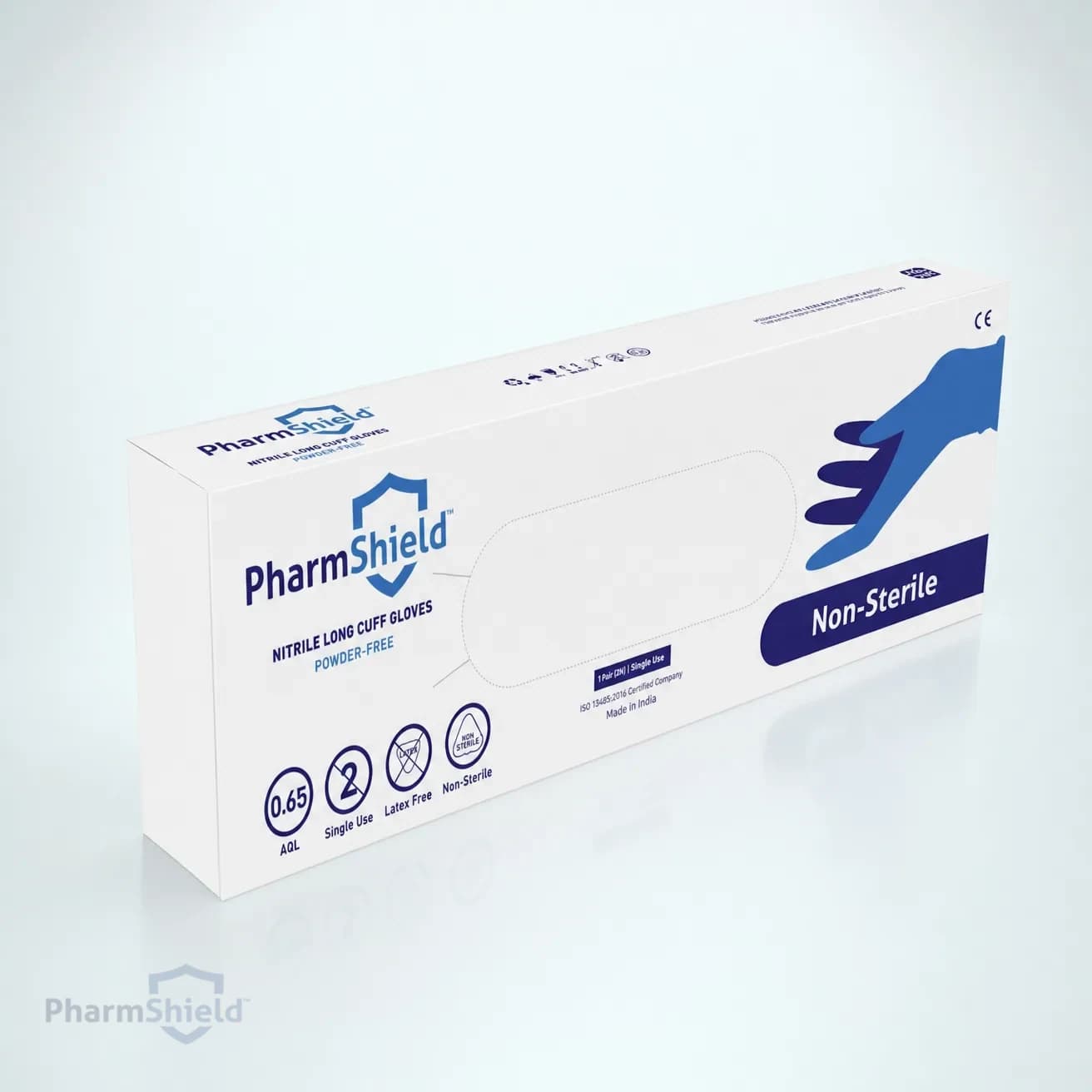
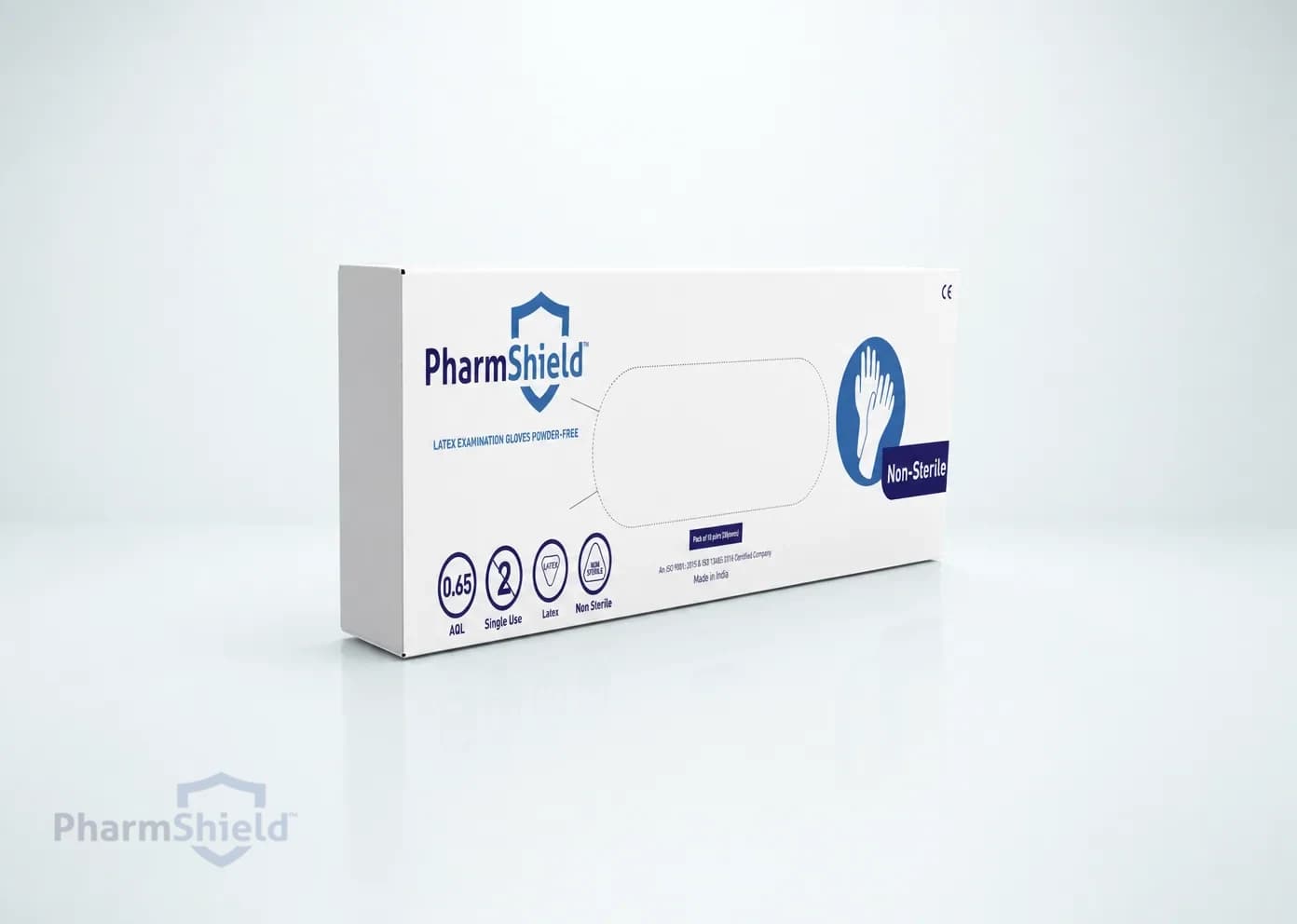
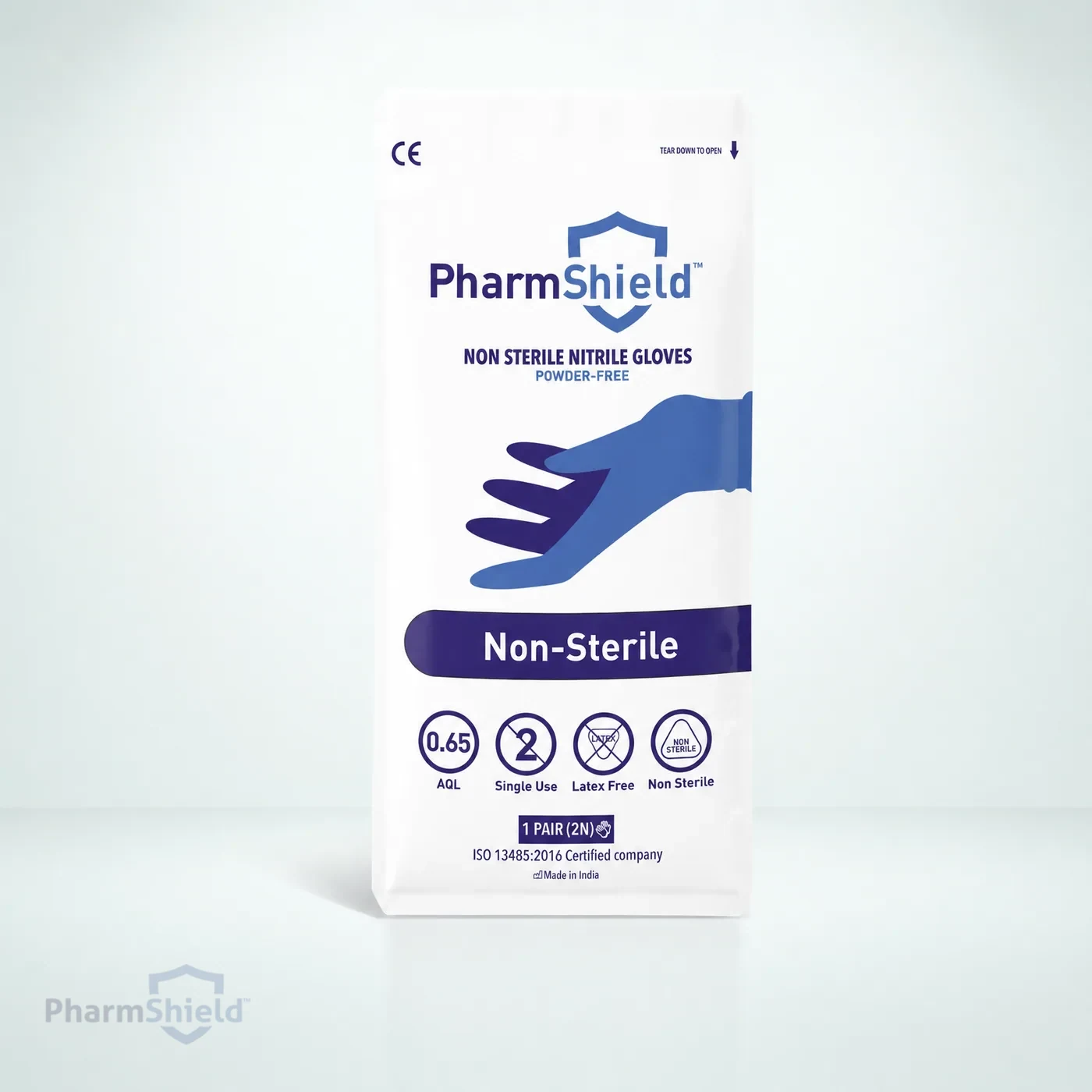
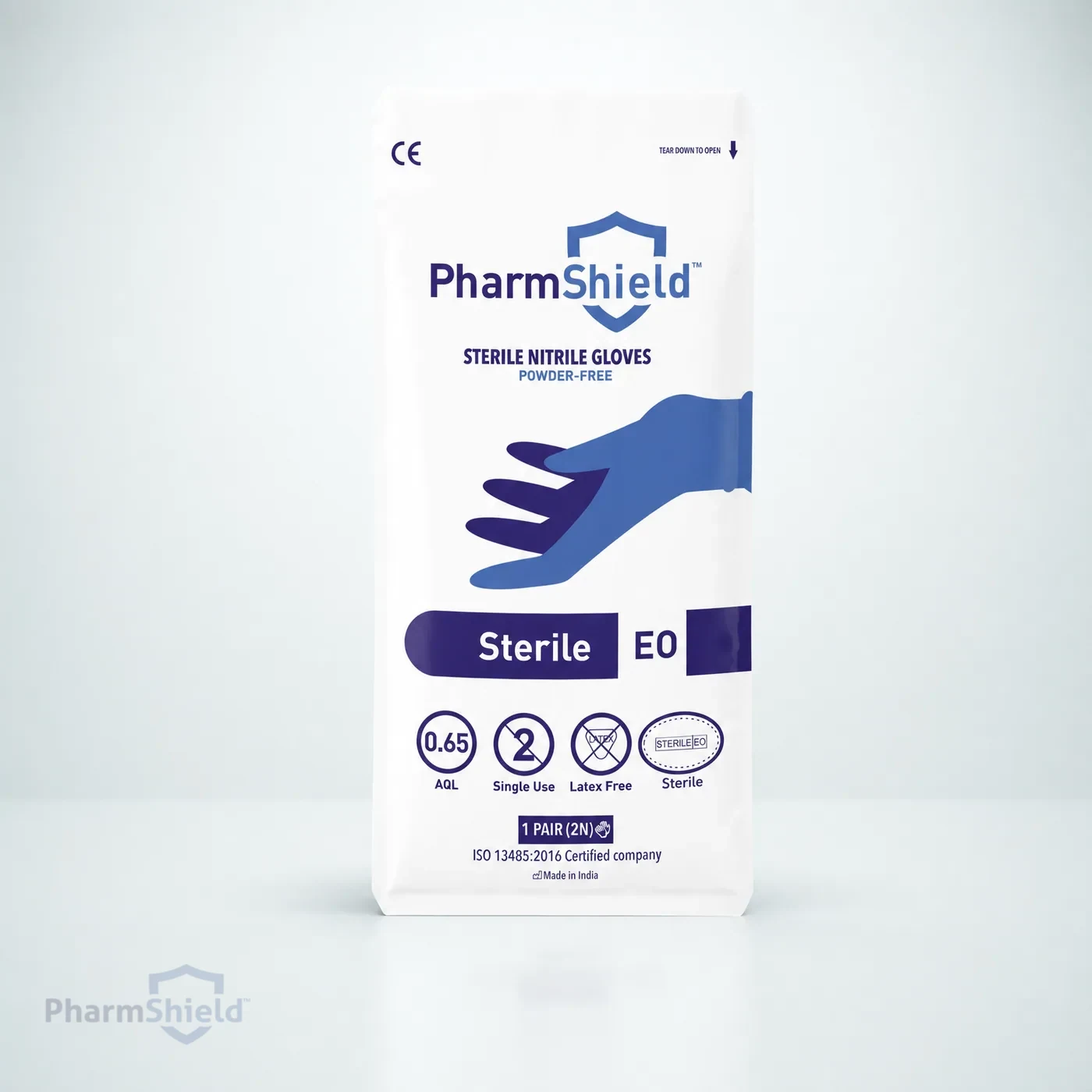
Lab Gloves by Application
Lab Gloves — FAQ
Laboratory gloves are most commonly made of nitrile (synthetic, latex-free rubber) or natural rubber latex. PharmShield lab gloves are powder-free in both materials — nitrile offers broad chemical-splash resistance and is latex-free, while latex offers high elasticity and tactile sensitivity. The right material depends on your chemicals, allergy constraints and the dexterity your work demands.
Disposable lab gloves come in a few key types: by material (nitrile or latex), by sterility (non-sterile for general bench work, or sterile ETO/gamma for protocols that require it), and by packaging (high-throughput dispenser boxes or individually packed for contamination-sensitive work). Long-cuff lengths from 12" to 18" add forearm coverage for pouring and splash-risk handling.
Neither is universally better — it depends on the task. Choose nitrile for the broadest chemical-splash resistance and when you need latex-free gloves. Choose latex when maximum tactile sensitivity and fit matter most and there are no latex-allergy concerns. Many labs keep both on hand and match the glove to the protocol.
For most chemistry-lab work, powder-free nitrile gloves tested to EN ISO 374-1 Type B give reliable protection against splashes and incidental contact with reagents and solvents. Always match the glove to the specific chemical you handle, and remember that disposable lab gloves protect against splash and incidental contact — not full immersion. For aggressive chemicals or immersion, step up to dedicated chemical-resistant gloves. See chemical-resistant gloves →
Yes — PharmShield nitrile and latex lab gloves are permeation tested to EN ISO 374-1 Type B for splash and incidental chemical contact. This is splash/incidental-contact protection, not immersion-grade. If a chemical you use isn't in our resistance guide, our R&D team can evaluate it for your application.
All PharmShield lab gloves are powder-free as standard, to minimise particulate contamination in analytical and sample-prep work. Sterile options (ETO or gamma irradiated, validated to SAL 10⁻⁶) are available where your protocol requires a sterile barrier, in both nitrile and latex.
How We Serve Your Industry
Consultation
Map your chemical exposure and compliance requirements
Sample Testing
On-site evaluation with your lab team
Customisation
Material, length, and packaging specification
Certification
EN 374 data sheets and batch-level COAs
Supply Partnership
Consistent supply with full traceability
Consultation
Map your chemical exposure and compliance requirements
Sample Testing
On-site evaluation with your lab team
Customisation
Material, length, and packaging specification
Certification
EN 374 data sheets and batch-level COAs
Supply Partnership
Consistent supply with full traceability
Need Chemical Resistance Data for Your Application?
Share your product specification or application requirements with us. Our in-house R&D team can support the development of glove solutions tailored to your operational needs. If your required chemical is not included in our existing resistance guide, additional permeation testing and performance evaluation can be conducted based on project requirements.