Nitrile Gloves for Automotive Assembly
PharmShield nitrile gloves for automotive assembly are powder-free, latex-free gloves built for the oils, fuels, solvents and sharp edges of a vehicle line — from component handling and paint-shop prep to EV battery and sensor work. Nitrile resists the petroleum-based fluids that swell and degrade latex, takes the punctures that thin gloves don't survive, and keeps a secure grip on oily parts. Every glove is made to AQL 0.65, and silicone-free, ESD-safe grades are available where paint adhesion or static control matter. If you're sourcing gloves for an automotive or EV line, this is the starting point.
 Nitrile · Automotive Assembly
Why automotive assembly needs specialty nitrile gloves
An automotive glove faces chemistry and mechanics at once — petroleum fluids attacking the material, sharp edges threatening the barrier, and processes like painting and EV assembly demanding the glove leave nothing behind. Automotive-grade nitrile is engineered against four concerns.
Oil, fuel & solvent resistance
Greases, lubricants, fuels and cleaning solvents swell and weaken natural rubber latex. Nitrile is inherently resistant to petroleum-based fluids, so the barrier holds through sustained contact on a line.
Puncture & abrasion strength
Stamped edges, clips, fasteners and trim cut thin gloves quickly. Nitrile's high puncture and abrasion resistance keeps the barrier intact across a full shift of component handling.
Grip on oily parts
Micro-textured nitrile maintains a secure grip on oil-slicked components, reducing drops and the hand fatigue that comes from over-gripping slippery parts.
Paint-shop & EV cleanliness
Silicone causes paint fish-eyes; static threatens EV electronics. Silicone-free nitrile and our ESD-dissipative anti-static grade (ANSI/ESD S20.20, IEC 61340-5-1, EN 1149-1) keep paint adhesion and battery-pack work clean and controlled.
Built to the Automotive Assembly spec.
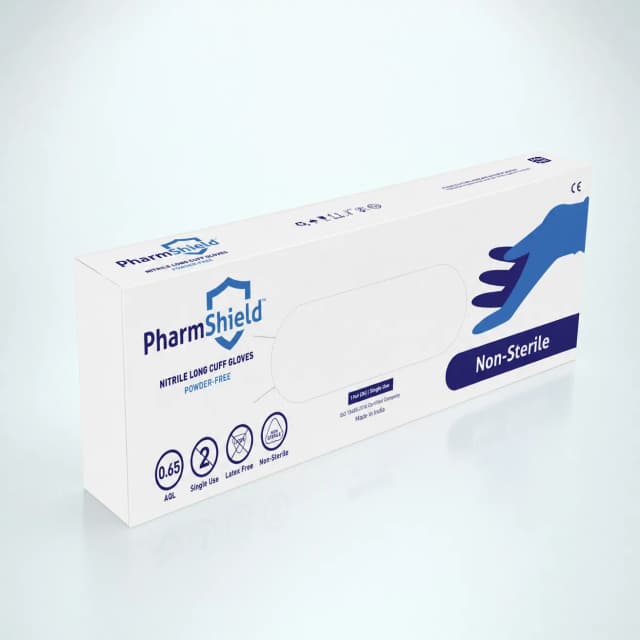
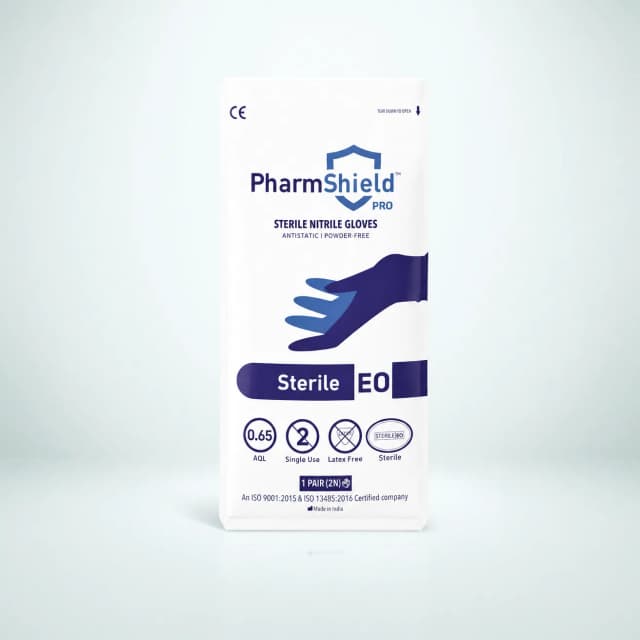
The right configuration for Automotive Assembly.
Nitrile gloves for Automotive Assembly — FAQ
Yes. Nitrile is inherently resistant to petroleum-based fluids — oils, greases, fuels and many solvents — which swell and degrade natural rubber latex. That makes nitrile the right material for automotive component handling, lubrication and cleaning tasks where the barrier must survive sustained fluid contact.
For static-sensitive EV electronics and battery-pack work, our Pro Anti-Static nitrile is ESD-dissipative and validated to ANSI/ESD S20.20, IEC 61340-5-1 and EN 1149-1. These manage static as part of an ESD-protected area; they are not electrical-shock insulation, which requires dedicated high-voltage PPE.
No — provided they are silicone-free. Silicone causes paint fish-eyes and adhesion defects, so PharmShield nitrile is processed silicone-free, making it suitable for paint-shop prep and surface handling without introducing coating defects.
Sourcing nitrile gloves for automotive assembly?
Send us your process, your standards and your volumes — our team will respond with the right configuration, a spec sheet and bulk pricing.