
Choose nitrile when chemical resistance, puncture strength, or latex allergy matter; choose latex when fit, tactile feel, and cost are the priority. Both are made to the same examination and surgical grades, both come powder-free and sterile (ETO or gamma) or non-sterile, and both can be supplied at AQL 0.65 (tighter than the ASTM baseline of AQL 1.5). The difference is the material, natural rubber versus synthetic, and that decides where each one performs.
| Nitrile | Latex | |
|---|---|---|
| Material | Synthetic rubber (NBR) | Natural rubber latex |
| Chemical resistance | High (oils, solvents, many acids) | Moderate |
| Puncture resistance | High | Moderate |
| Fit & tactile feel | Good, less elastic | Excellent, very elastic |
| Allergy risk | None (latex-free) | Natural latex protein allergy possible |
| Typical cost | Slightly higher | Lower |
| Best for | Chemical handling, pharma/lab, latex-sensitive teams | Fine-motor work, surgery, cost-sensitive volume |
What nitrile gloves are
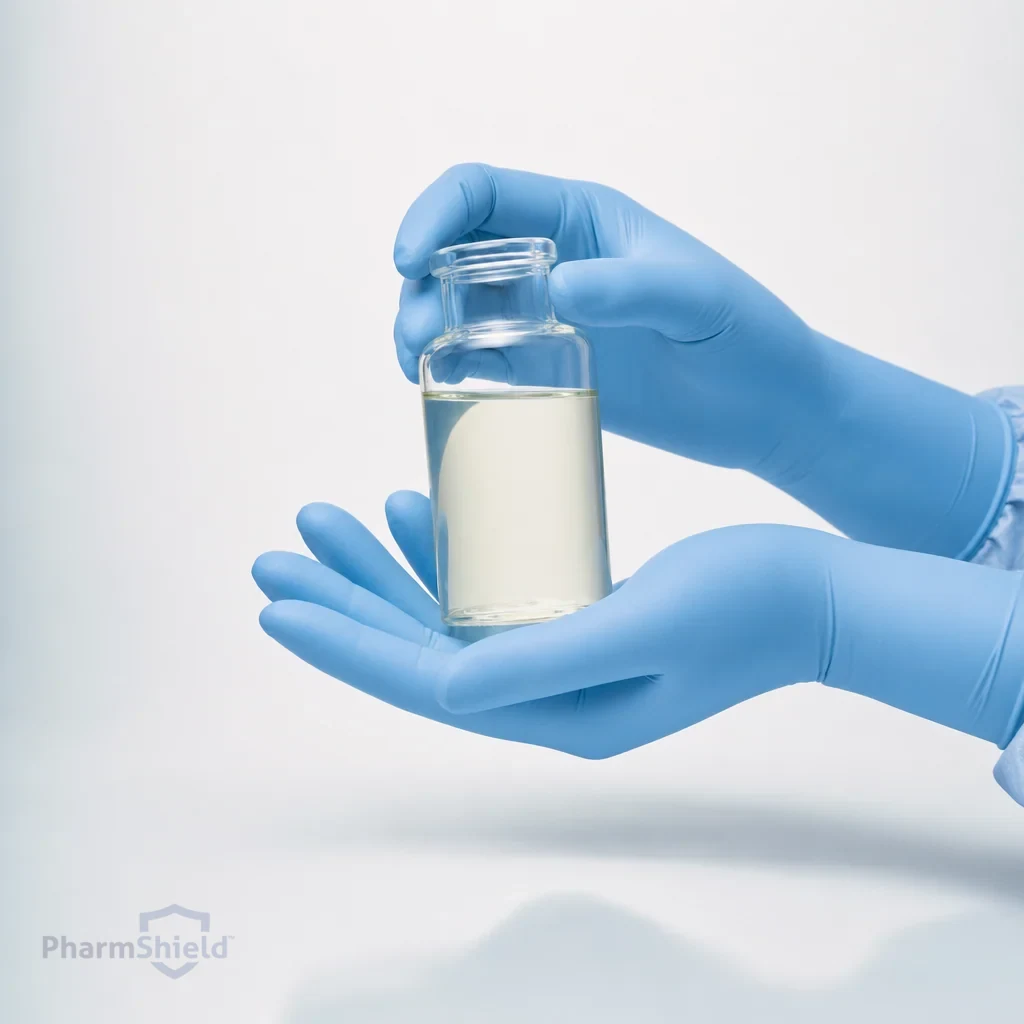
Nitrile is a synthetic rubber made for durability. It resists punctures and a wide range of chemicals (oils, solvents, and many acids), which is why labs and pharmaceutical lines lean on it. It contains no natural latex protein, so it’s the default where latex allergy is a concern. The trade-off is elasticity: nitrile is less stretchy than latex, though modern formulations have closed most of that gap.
Pros: chemical and puncture resistance, no latex-protein allergy, durable.
Cons: slightly less elastic and usually a little more expensive than latex.
What latex gloves are
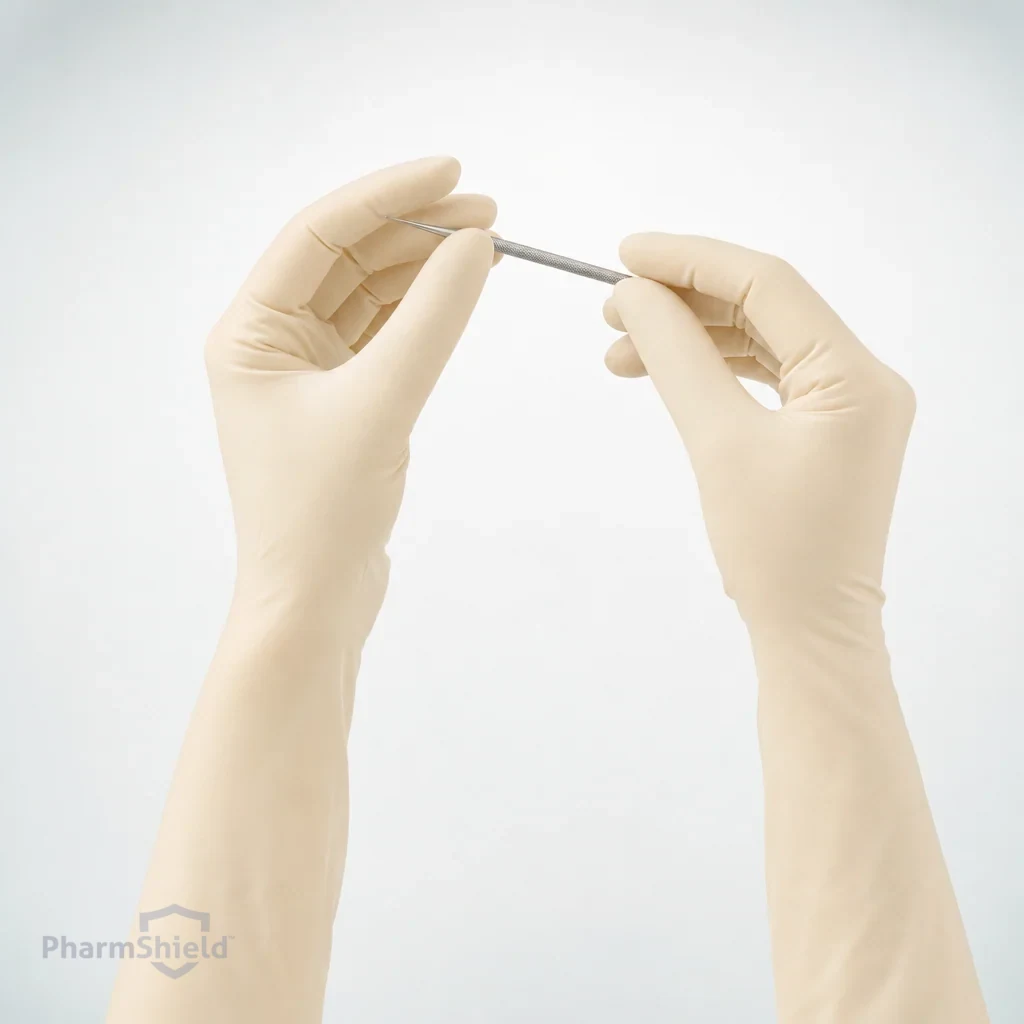
Latex is natural rubber. It’s prized for fit and feel: it moulds to the hand and transmits fine sensation better than any synthetic, which is why many surgeons still prefer it. It’s also typically the lowest-cost option at volume. The catch is the natural latex protein, which can trigger allergic reactions in a small share of users, so many regulated facilities have moved away from it or switched to low-protein, powder-free latex.
Pros: excellent fit and tactile sensitivity, comfortable for long wear, lower cost.
Cons: latex-protein allergy risk; weaker against solvents than nitrile.
Which to choose, by application
- Pharmaceutical manufacturing & cleanrooms: nitrile, for chemical resistance and to avoid latex protein in controlled environments. See our pharma range.
- Laboratories: nitrile for chemistry and solvent work; latex is fine for low-chemical handling where feel matters. See labs.
- Food handling: nitrile, for chemical resistance and because blue nitrile shows up if it tears (contamination visibility).
- Surgery: latex remains common for tactile precision, with nitrile as the latex-free alternative; both come sterile (ETO or gamma).
- Latex-sensitive teams: nitrile, every time.
Allergy and cost, briefly
If anyone on the team reacts to latex, the decision is made for you: go nitrile. On cost, latex is usually lower in cost per glove, but factor in waste: a glove that tears or doesn’t suit the task doesn’t save money in practice. For most regulated B2B buyers the deciding factor is the work, not the unit price.
PharmShield makes both, powder-free and to AQL 0.65, in sterile and non-sterile grades: nitrile and latex. If you’re not sure which fits your process, request samples of both and test them on the line.