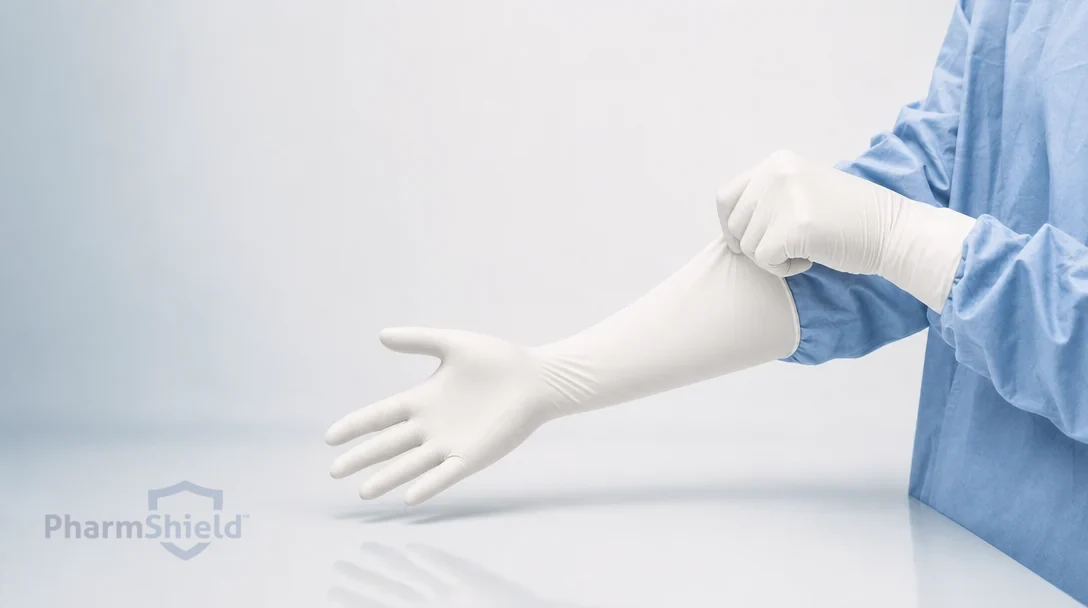
The single rule of donning a sterile glove: its sterile outer surface must never contact a non-sterile object, including your bare hand. Everything about the technique, and about how the glove is packaged, exists to protect that outer surface, because that is the side that will touch the sterile field. Get that one principle right and the steps follow naturally.
Before the steps, look at the packaging. It’s doing half the work for you.
Start with the packaging
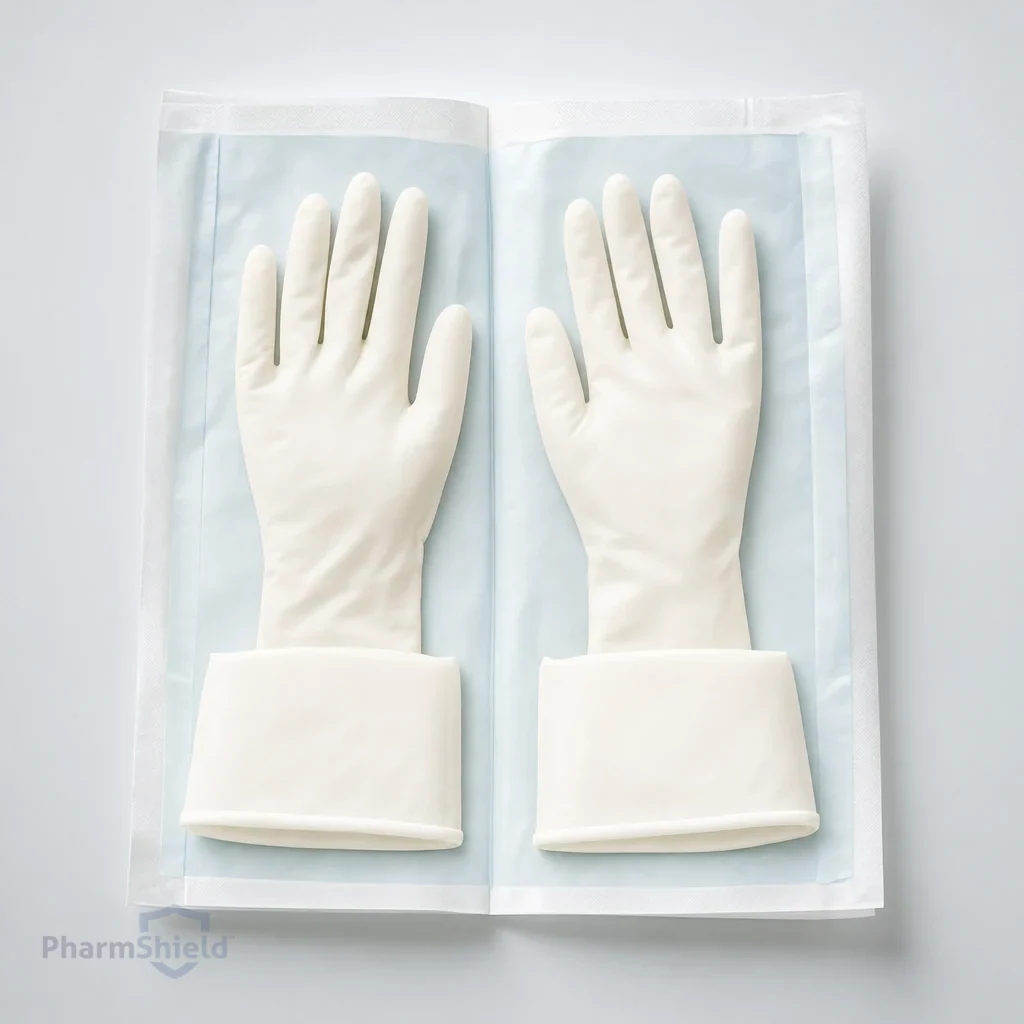
A sterile glove is packed to be donned safely. Open the outer pouch and you’ll find the glove (usually a pair) laid out on an inner wrap with three deliberate features:
- All five fingers are visible and laid flat, so you can orient the glove without fumbling.
- The cuff is folded back on itself (turned outward into a wide cuff), so the folded edge exposes the inner surface of the glove.
- The inner wrap opens like a book, giving you a clean, flat surface to work on.
That folded cuff is the key. When you pick the glove up by the folded cuff, your fingers touch only the inside of the glove, the side that will sit against your skin. The outer surface stays untouched and sterile.
The open gloving technique, step by step
This is the standard open-gloving technique for donning sterile gloves. It’s common for sterile procedures, wound care, aseptic processing, and cleanroom applications, and it can be performed on yourself or by an assistant who has already followed the sterile procedure.
- Wash and dry hands thoroughly (or perform surgical scrub if required). Let them dry completely.
- Open the inner wrap by its edges, touching only the wrap, and lay it flat. The gloves sit palm-up with cuffs folded toward you.
- Glove the first hand. With your bare hand, pick up the first glove by the folded inner cuff only. Insert your hand carefully, touching only the folded inner cuff. Leave the cuff folded until both gloves are on, and don’t touch the outside.
- Glove the second hand using the gloved hand. Slip your gloved fingers under the folded cuff of the second glove (touching only its outer surface, which is sterile-to-sterile) and slide your bare hand in.
- Unfold both cuffs by working under the fold with the gloved hand, drawing the cuff up over the wrist. Keep gloved fingers under the fold the whole time, and unfold without letting the gloved exterior touch exposed skin or any non-sterile surface.
- Adjust the fit. Interlock fingers to seat the gloves, touching only sterile outer surfaces against each other.
At no point does a bare hand contact an outer surface, and no gloved hand contacts your skin. That’s the whole technique.
Common mistakes that break sterility
- Unfolding the cuff too early, then grabbing the outside with a bare hand.
- Touching the gloved hand back to skin, hair, or a non-sterile surface while adjusting.
- Donning over wet hands, which makes the glove drag and tempts you to grab the outside.
- Letting the glove touch clothing, masks, eyewear, or other non-sterile objects during donning.
- Touching environmental surfaces after donning but before starting the sterile procedure.
- Using gloves with damaged packaging or a compromised sterility indicator.
When you need sterile gloves
Sterile gloves are for any procedure needing aseptic handling or contact with a sterile field: pharmaceutical manufacturing, microbiology laboratories, aseptic filling, cleanrooms, and food processing where contamination control is critical (as well as clinical uses like wound care). For general examination or industrial handling, non-sterile gloves are appropriate. PharmShield sterile examination gloves are individually packed and sterilised by validated ETO or gamma processes, giving a reliable sterile barrier for critical environments. Request specs or samples.